Posts, per profile
Each profile gets its own posts about work in its own area. The same post copied across every location is the fastest way to have them read as duplicates of each other.
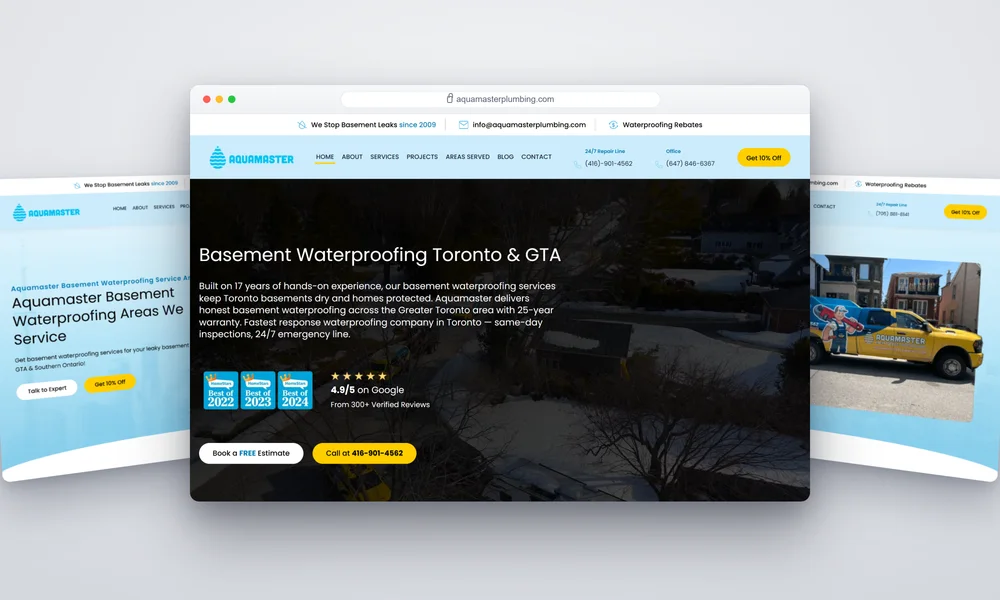
An Ontario basement waterproofing company, trading since 2009, with a separate Google profile for every area it serves — from Toronto out to Georgian Bay. This engagement is the Google side only: the profiles, the Maps posts, the review replies and the business listings. Their website was built by someone else and I do not touch it.
One Google profile is a task. Several profiles for one company is a different job, because the thing that makes each one rank — being distinctly and consistently itself — is exactly what gets destroyed when you copy work between them.
Waterproofing is bought in an emergency. Somebody with water coming through a foundation wall searches from their phone, and the map decides who gets that call. A profile for the wrong end of the province is not a near miss; it is a lost job, because nobody drives two hours for an emergency call-out.
A basement waterproofing and drain company operating across Ontario since 2009, with a separate Google Business Profile for each service area. I run the Google side: Maps posts, same-day review replies, photo uploads, profile fields kept current, and business listings built and audited across the directories Google cross-checks. I did not build their website — it is the client’s own, and this case study makes no claim on it. Google Maps management starts at $149/month per profile. Their site is at aquamasterplumbing.com.
A profile that sends everyone to the homepage wastes the click: the visitor arrives somewhere general and has to find their own city again. Each profile here is set to the company’s page for that area, so somebody tapping the listing in Barrie lands on the Barrie page with the local phone number already on screen. It is one field in the profile and it changes what happens after the tap.
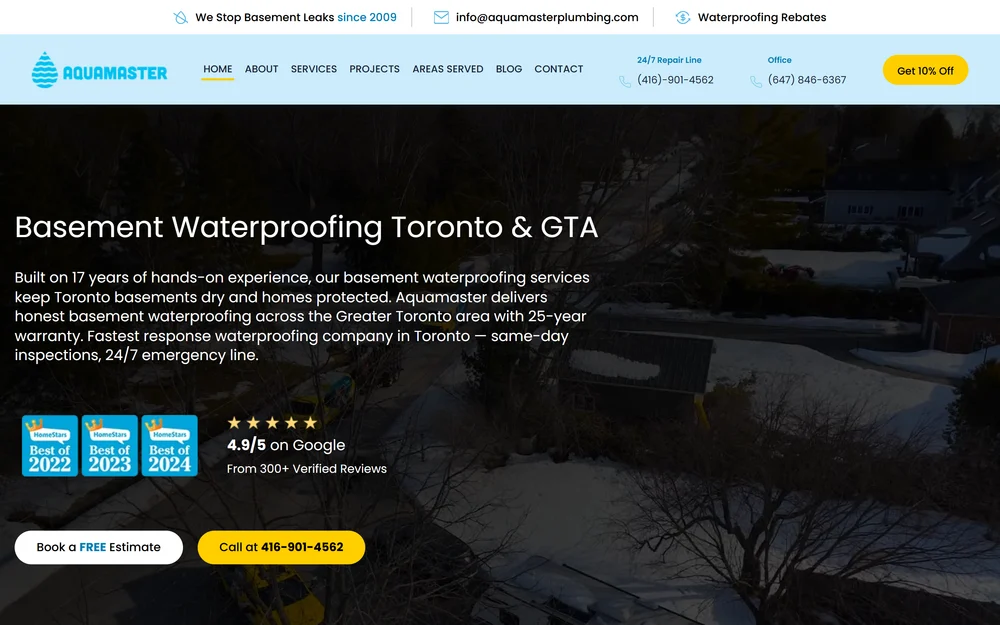
Each area below has its own Google profile that I manage, pointing at that area’s page on the company’s site.
None of this is one-time setup. A profile that stops being fed slides down the map over a few months.
Each profile gets its own posts about work in its own area. The same post copied across every location is the fastest way to have them read as duplicates of each other.
Every review answered, naming the service and the city, in the voice of the business. Reviews are never manufactured or requested in bulk — that is a policy breach and it risks the profile itself.
Directory entries opened individually rather than judged from a search snippet. That is how a listing that looks like a duplicate turns out to be a different city, and how a real one gets found unclaimed.
One format for the company name, one for each address, one phone per location, matching across every profile and every directory. Contradictions are what quietly cost a local ranking.
Fake and keyword-stuffed competitor listings in the same map pack get reported to Google. In some trades that is the single largest thing sitting between an honest business and the top three.
Every profile is checked automatically for changes nobody on our side made — a name, a pin or a phone edited by Google or by a stranger’s suggestion — so it is caught in hours rather than found months later.
It is worth saying plainly, because a portfolio page implies authorship whether or not the word appears. The company’s website is their own and was built by someone else. What I am responsible for is everything on the Google side of the business: the profiles, what gets posted to them, how reviews are answered, and whether the directories Google reads agree with each other.
The two jobs are separate and they are priced separately. If you want the Google side handled for a business you already own, that is Google Maps management, from $149 a month. If a profile has never been set up properly in the first place, that is a one-time setup. And if the site itself is the weak link, the free audit will say so before anyone quotes you anything.
The work multiplies but the rules get stricter. Each profile needs its own posts, its own photos and its own review replies, and the name, address and phone have to match across every profile and every directory. Copying one profile’s content to the others is the fastest way to have them treated as duplicates.
Plans start at $149 a month for one profile and run to $449 for the heaviest posting schedule — the tiers are on the Google Maps management page. A company with several locations is quoted per profile, because each one genuinely needs its own posts, photos and replies.
No. I reply to the reviews that arrive, the same day where possible, and I report obvious spam reviews to Google. Manufacturing reviews is against Google’s policies and puts the profile itself at risk, which is the opposite of what this service is for.
Listings are where Google cross-checks the name, address and phone it already holds. A directory carrying an old suite number or a different company name is a contradiction, and contradictions cost trust in exactly the signal a local ranking is built on.
No. This engagement is the Google side only — the profiles, the posts, the replies and the listings. The company’s website was built by someone else and I do not touch it.
Tell me how many profiles you have and which cities actually matter — see Google Maps management from $149/month.
For a planning session or on-site business photos, I'll come to you. Pick your city: